Nutrition

An overview of nutrition and its importance on physical and mental health

Menstruation: The Red Truth

Delve into the intricacies of a biological process women are all too familiar with!

Anxiety: The Shackles of Mental Well-Being

A plague that haunts many, but only few are brave enough to tackle it head-on!

Yoga: The Harmony Within

Have a look at this ancient Indian science that is gaining traction in Eastern and Western civilizations alike!

Hygiene: The Key to Wholistic Health

An article to highlight the evergrowing importance of Hygiene in the day-to-day life of Human Beings!

Showing posts with label Stigma. Show all posts

Sunday, January 31, 2021

Diseases and Stigmas that Haunt Them


What are stigmas of diseases? Stigma is a “collection of negative attitudes, beliefs, thoughts, and behaviours that influence the individual, or the general public, to fear, reject, avoid, be prejudiced, and discriminate against people”. It is the negative feedback or discrimination done by a healthy individual on a diseased individual. This enables varieties of discrimination that leads to denial of the individual from full social acceptance and ignites social inequalities. In a society stigma draws a fine invisible line between “normal” and “outsider,” and between “us” and “them”. And to our surprise God doesn’t discriminate but we humans do - one of the finest creations of God. This is how humans treat humans. We say we are educated but such behaviour towards anyone makes one educated illiterate. These stigmas sometimes break the individual so much that he himself starts to think that he is a so-called “outsider”. This sounds like a stereotype, doesn’t it? Don’t you think this is another way of discrimination just like racism and caste discrimination?

Question is how we can erase this line of discrimination which is adding another challenge that is disturbed mental health? So, it should have the same norms as for any other discrimination. Also stigmatizing an individual not only affects that person but also the family and immediate community. Sometimes this leads to not getting acceptance from the family itself due to the society pressure. So, the affected individual starts losing confidence and not approaching for professional help. Along with physical illness, they are forced to go through mental illness which at times brings them to a point of committing suicide. Many suicides in India are due to such chronic illness. Such stigmas are way more harmful than the disease itself. The disease a person is suffering from may be curable, however, the stigmas suffixed to it can’t. Most commonly the people suffering from AIDS, leprosy, mental illness and recently COVID-19 are the preys to these stigmas. What we need to understand is this can happen to us as well.

It’s important to make them realize that there’s no “right” or “wrong” way to respond. We should give them sufficient time to process the news so that they are kind to themselves while adjusting to new situations. So, let's take a decision of not letting them go through another level of distress when they are already going through one. It not only affects people who are suffering, but also creates a negative impact on ordinary people. It makes people to hide symptoms or illness, keep them from seeking help on time and ultimately leading to increased suicide rates. The laws should be as strict as for discrimination and harassment because we all know this is no less than a crime. So, let's come together and join hands against such stigmas!

Stop the Stigmas, Support the Stigmatized!


Sunday, January 24, 2021

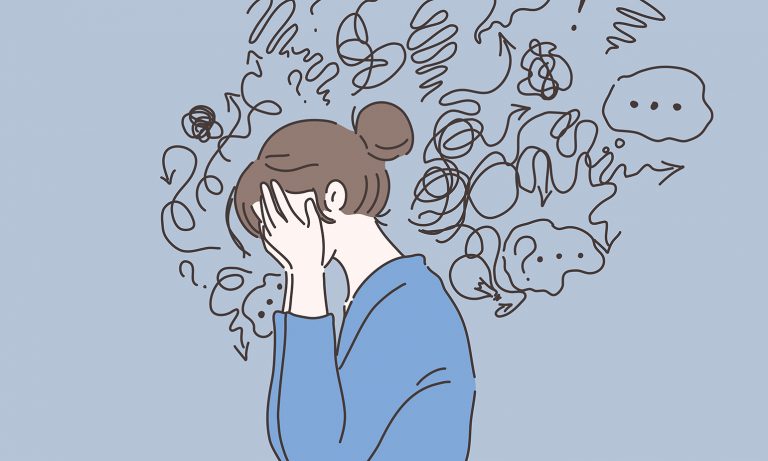
Anxiety: The Shackles of Mental Well-being


Anxiety is a feeling of fear, dread, uneasiness. Occasional anxiety is part of life as we might feel anxious when faced with some problems or severe work load or in some stressful situations so it is normal to get anxious in some situations. Anxiety can be grouped from mild to severe type. Mild anxiety helps us to get more focused, it boosts our energy but if it gets severe it may end up in symptoms like nightmares, panic attacks, sweating, intense fear, phobia, depression. There are mainly three types into which anxiety can be classified, likely Generalized anxiety disorder(GAD), Panic attacks, Phobia-related disorder.

Generalized anxiety disorder(GAD) includes excessive anxiety or worry comes from personal health, work load, social interactions, financial problems which can last up to 6 months. Symptoms includes feeling restless, wound-up, or on-edge, being easily fatigued, having difficulty concentrating; mind going blank, being irritable, having muscle tension, difficulty controlling feelings of worry, having sleep problems, such as difficulty falling or staying asleep, restlessness, or unsatisfying sleep.

Panic attack is a sudden feeling of extreme anxiety or intense fear without a clear cause or when there is no danger, people may experience: heart palpitations, a pounding heartbeat, or an accelerated heart rate, sweating, trembling or shaking, sensations of shortness of breath, smothering, or choking, feelings of impending doom, feelings of being out of control.

Phobia is an intense fear of a particular object or situation. People with a phobia may have an irrational or excessive worry about encountering the feared object or situation, take active steps to avoid the feared object or situation, experience immediate intense anxiety upon encountering the feared object or situation, endure unavoidable objects and situations with intense anxiety.

Treatment with psychotherapy, medication, self-help is generally done in anxiety. In psychotherapy, talk therapy, cognitive behavioural therapy can help. Medications include anti-depressants, anti-anxiety drugs, etc. Support groups, stress management techniques also can be done to overcome anxiety.